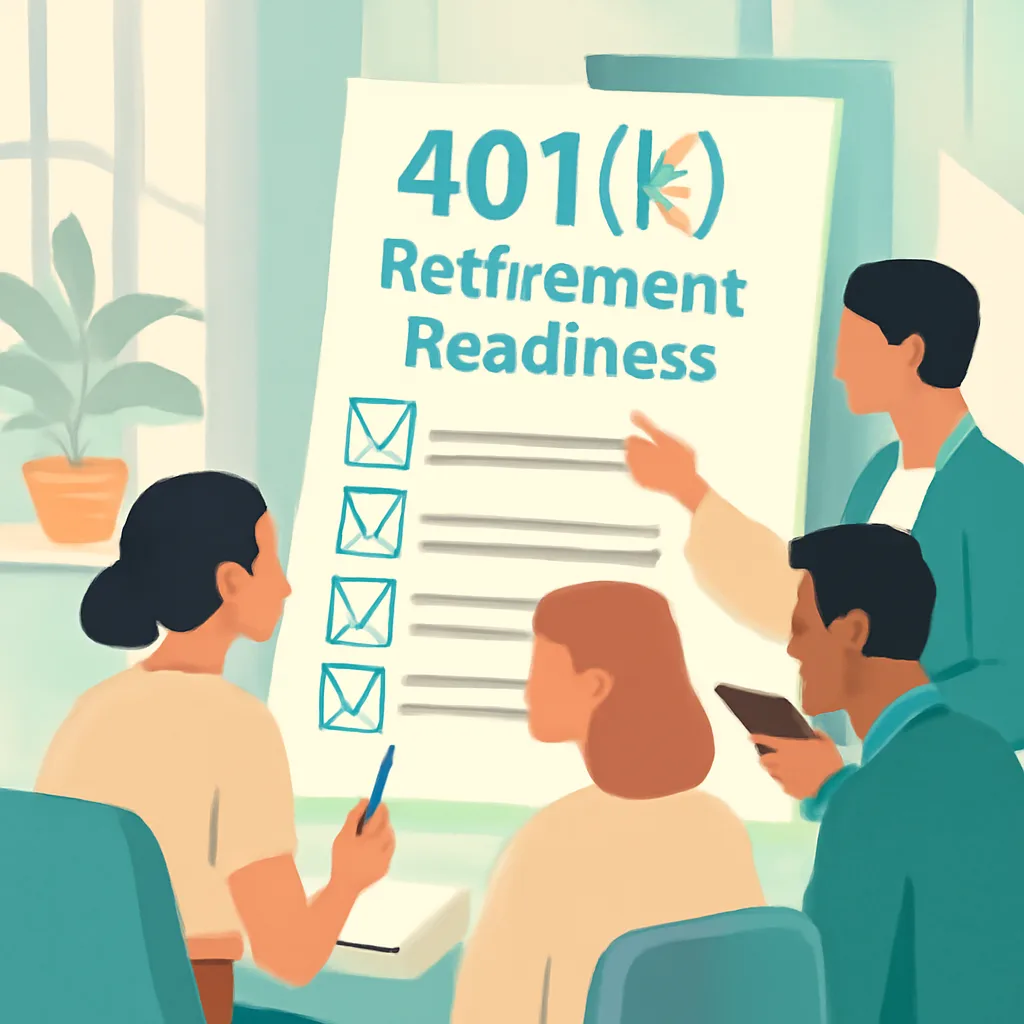
How to Ensure Your 401(k) Is Ready for Retirement: A 5-Step Checklist
How to Ensure Your 401(k) Is Ready for Retirement: A 5-Step Checklist
Retirement planning can often feel overwhelming, especially when it comes to managing your 401(k) investments. With numerous factors to consider, how can you ensure that your 401(k) is effectively positioned for your retirement goals? This article presents a five-step checklist to help you evaluate your 401(k) and make informed decisions about your retirement savings.
1. Define Your Retirement Goals
Before diving into your investments, it’s crucial to define your financial goals. Ask yourself:
- What do I want my retirement to look like?
- How much money will I need annually?
- At what age do I plan to retire?
Setting clear targets can help you measure your progress. Consider using benchmarks based on average savings for your age group, such as aiming for 1x your income at age 30, 3x at 40, 6x at 50, and 8x at 60. These targets can provide a solid foundation for your retirement planning.
2. Assess Your Current Savings
Once you have your goals outlined, evaluate your current savings and how they stack up against your targets. Look at:
- Your total 401(k) balance
- Current contributions and employer matches
- Investment performance over time
If your 401(k) balance is growing as expected, you may not need to make drastic changes. However, if you find yourself falling short, it may be time to reassess your investment strategy.
3. Understand Your Risk Tolerance
Understanding your risk tolerance is essential in shaping your investment approach. Consider:
- How would you react to a market downturn?
- Are you comfortable with the potential for short-term losses?
Experiencing a bear market can help you gauge your risk comfort. If the idea of losing 20% of your portfolio value sounds too distressing, it may be prudent to adopt a more conservative investment strategy. Balancing risk and reward is key to maintaining your peace of mind.
4. Analyze Your Investment Allocation
Next, take a close look at how your 401(k) is allocated:
- Are you diversified across various asset classes?
- Do you have a mix of stocks, bonds, and other investments?
Diversification can help mitigate risks associated with market fluctuations. If your 401(k) is heavily weighted in one sector, such as technology, evaluate whether you need to rebalance to achieve a more stable portfolio. For instance, with tech stocks representing a significant portion of the S&P 500, it’s essential to ensure you are not overly exposed to market volatility in that sector.
5. Stay Informed and Review Regularly
Finally, staying informed about market trends and reviewing your 401(k) regularly is vital. Key points to keep in mind include:
- Monitor changes in market conditions
- Stay updated on economic indicators that could affect your investments
- Review your 401(k) performance at least annually
Regular reviews can help you adjust your strategy as needed and ensure you remain on track to meet your retirement goals.
Conclusion
Navigating your 401(k) can be daunting, but following this checklist can empower you to take control of your retirement savings. By defining your goals, assessing your current situation, understanding your risk tolerance, analyzing your investment allocation, and staying informed, you can set yourself up for a more secure retirement.
FAQs
Q1: What should I aim for as a balanced investment in my 401(k)?
A1: A balanced investment typically includes a mix of stocks and bonds, often suggested as 60% stocks and 40% bonds, but this can vary based on your risk tolerance.
Q2: How often should I review my 401(k)?
A2: It’s advisable to review your 401(k) at least once a year or whenever there are significant market changes.
Q3: What is the average savings for retirement by age?
A3: Targets include 1x your income at age 30, 3x at 40, 6x at 50, and 8x at 60.
Q4: How can I improve my 401(k) performance?
A4: Improving performance can involve increasing contributions, reallocating investments for better diversification, and regularly monitoring market trends.
Q5: What if I feel overwhelmed by my investment choices?
A5: Consider consulting a financial advisor to help clarify your options and develop a personalized investment strategy.
Related reading
Sources
This article aggregates 2 sources. Click (source N) inline to jump to the matching entry.